
Showing posts with label firearms. Show all posts
Showing posts with label firearms. Show all posts
Monday, July 11, 2011


Wednesday, December 22, 2010
Henry AR-7 Survival Rifle
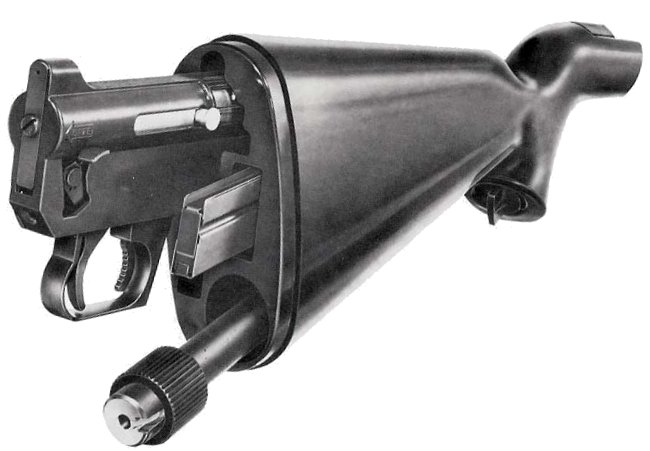
http://www.henryrepeating.com/rifle-survival-ar7.cfm
Jack Spirko's upcoming book: Mastering the 22 Rifle
http://www.masterrifleman.com/
Wednesday, September 15, 2010
9mm Rifle that takes Pistol mags
Here's an option for a close range battle rifle.
http://www.kel-tec-cnc.com/sub2000.htm
http://www.kel-tec-cnc.com/sub2000.htm
Thursday, September 2, 2010
Slicing the Pie
By Lindsey Bertomen of Officer.com
Slicing the pie, or "pie-ing," is a method of looking around corners and obstacles while presenting the smallest possible target. It is a dynamic movement technique designed to minimize exposure around cover and maximize the tactical advantage for the officer.
Nearly anyone who has completed "Police School 101" has some familiarity with pie slicing. It is named after the shape of the officer's reward for tactical movement. As the officer moves tactically, he receives a bigger slice of the pie.
Slicing is a fluid dynamic method. As the unpredictable elements change, the officer's responses change. For example, a door can be attached by several different configurations causing it to open at least five different ways: toward the officer, away from the officer, toward the officer in the same room, away from the officer in the same room and sliding. The way a door opens and whether it is open will cause the officer to respond in a distinct manner.
It takes at least two officers to slice a stairway, regardless of the architecture. If the stairway takes a turn, one officer will have to negotiate it backwards, eyes on the landing. Even when ascending a simple stairway, one officer must slice the entrance to the stairway, the other the landing.
Making the tactical decision
All tactical decision making is time sensitive. A high-risk situation is governed by responses to actions that each adversary makes. If the suspect does something, the officer makes a decision based on this action and surrounding factors. The quicker the decision response cycle, the quicker the reaction time.
This concept is not new. It is attributed to Air Force Col. John Boyd. An outspoken military pilot, Boyd observed that tactical decision making had a cycle of processes. The process of observe, orient, decide and act occur in a cycle - the OODA Loop. The adversary who completes the OODA Loop the quickest will win.
In the 1950s, Boyd bet other pilots that he could put his jet on their tail within 40 seconds or pay them $40. Legend has it that he never lost his $40. Boyd's instinctive concepts of combat were the foundation for combat decision-making processes employed by almost every great leader.
One of the tenets of the OODA Loop is exploiting surprise. The winning officer will increase the duration of the orient phase of the suspect's OODA Loop when slicing the pie. The idea is to cause the suspect to delay his perception and misread the environment. If the suspect's information is incomplete, decision making is delayed. The longer the delay, the greater the officer safety.
While introducing confusion in the suspect's OODA Loop, the officer shortcuts his own loop the same way a race car driver apexes a corner for more speed. The officer has a series of templates for each scenario. If the template works, he can quickly apply them, decreasing his response time. The templates come from training. For pie slicing, every search an officer performs reshapes the library of templates.
As officers begin obtaining better templates, they realize the concepts of pie slicing also can be used in situations like vehicle stops.
Preparing to train
For this article several scenarios were experimented with where officers searched inside a building. The purpose was to clearly illustrate using geometry as a tactical advantage. The Airsoft pistol from 21st Century Airsoft and a Raidhouse were two training aids used that significantly improved data collection on slicing the pie.
The Airsoft pistol is a tool that adds realism to training, incorporating the same operating system, trigger action, dimensions, disassembly and "feel" of a Glock 22. Additionally, it fit the same holsters and equipment one would use on patrol. Using full face protection and appropriate clothing, the Airsoft pistol allowed officers to run scenarios that included realistic force decisions.
The Raidhouse, a portable tactical training system, consists of a steel-framed enclosure with coated vinyl walls. Quickly erected, users attach removable walls on the net ceiling. This allows for an infinite variety of configurations, including hallways, doorways and rooms. The interior can be reconfigured in seconds, making the next scenario distinct from the previous one.
Using the training tools and collecting data from experienced officers, the Law Enforcement Technology Test Team was able to compile a list of recommendations for training in pie slicing.
If moving sideways is working, avoid the temptation to move forward
One of the biggest mistakes an officer will make is moving forward too quickly while he can still be moving laterally. In training, the easiest way to recognize this error is to watch officers shuffle right to a doorway, slice the interior, then move forward to the point where there muzzle is beyond the barricade. Even experienced officers occasionally let their muzzle go beyond a wall, then realize that anyone on the other side of the wall could grab it.
Using the Raidhouse, several search scenarios where the primary officer hugged the wall on the same side as a doorway were utilized. It was found that the suspect was able to grab the weapon almost every time. Even in training, this forced the hand of the officer. When this scenario was run with a carbine, the suspect was able to grab the rifle with both hands every time. This also forced the officer to resort to the handgun. Obviously, leading with the weapon demonstrates a serious training deficiency.
On a hallway with doors on both sides, the two-man officer team will generally move in a staggered formation to the first doorway. The lead officer will move in a question mark shaped pattern with the opening of the hook facing the doorway. When the lead officer has sufficiently sliced the doorway, the two officers will switch positions. There is no hard and fast rule in this situation - a collection of officer safety habits will work. A little bit of experimenting will show any officer the fact that backing off from a doorway allows a better field of view while slicing.
In an ideal world, officers will have their backs against the opposite wall of a hallway when slicing a doorway. In the Raidhouse, the closer an officer stayed to a doorway opening, the more likely the gun was grabbed. As officers sliced from the opposite wall, the reactionary advantage was maximized.
There has to be a fluid switch from contact to cover between two officers. In a hallway with several doorways, one officer has to look down the hall while the other slices an open doorway. This action immediately implies that they will have to leapfrog to the next doorway. However, if one of them has a long gun, the officer who can holster his weapon becomes the handcuffing officer by default.
The recommended way to train for fluid role switching is for training managers to have squads train together.
No safe assumptions
Assume the worst case scenario - the suspect can see you. Do not assume the suspect will stay put when discovered. Do not assume the suspect will stay put at all.
The number of scenario possibilities is countless. However, the earlier the officer can identify a threat by correctly slicing, the more complete and effective his action. If the suspect rushes the officer, slicing the pie will give the officer more time to react.
When searching, it is a safe assumption the suspect knows someone is looking for him. It is also safe to assume the suspect can detect someone entering a residence. The sensory clues could be something as simple as the rush of air when a door opens. One can even assume a suspect can hear an officer moving down a hallway. Despite all this, slicing the pie gives the officer a tactical advantage. A suspect or suspects might know the general area of the search but probably cannot fix the position of any of the officers. Even if they could, the tactically savvy officer is behind cover when he makes his observations.
When using the Raidhouse, it was easy to guess the location of the searching officer every time. After all, the walls are made of coated vinyl and the ceiling is a net. Even with these disadvantages, the officer who sliced the pie correctly always won, because he acquired a visual target by careful, deliberate movements. This is the most important data.
Think in three dimensions
One southern California agency was given some abandoned apartments for training. A nearby agency provided the actors for the scenarios. During one scenario, officers were told they were responding to an unknown call for help inside of an apartment complex. Four officers performed the search. As they moved down a hallway, they heard a female voice crying for help, saying, "He's got a knife! He's going to stab me!" From the screaming they were easily able to find the correct apartment. They paused outside of the apartment door, which was halfway open. The officers decided to rush in the apartment and overtake the suspect. There were two surprises beyond the door. First, the "victim" shot the first two officers with a "red gun." Second, the "victim" was squatted on top of a refrigerator, not where most people would assume the threat would come from.
This training scenario yielded several lessons. Never assume that the suspect is flat-footed. When slicing, look at the whole picture that unfolds, not just the one at chest level. Apply the correct template to the correct scenario. In this case, a deliberate look inside the apartment or a little intel would have been handy.
Consider alternative tools
Slicing the pie is only part of the equation. Another element that needs to be included is the common sense approach. The officer may have done everything right and sees where the suspect is hiding. Now it is time to use the correct tool. For example, if the suspect responds to verbal commands, there is no reason to move forward. If verbal commands are not working but canine use is appropriate, use the canine.
Other considerations - whether to enter a room, whether it will take both officers to clear a room - depend on how much officers can see when inspecting the room from the hallway, vision obscurements and the size of the search.
External slicing
Slicing is just as appropriate outside the building. When walking up to a call, every officer has the radar on, spotting potential hazards and cover along the way. Officers naturally place cover between where they are and where they are going. This is best trained by putting a threat target downrange during live-fire training and having officers walk up to a barricade. They will naturally orient to "this side toward enemy" and gravitate toward the barricade. The other part of this training is officers learn to back off a little from the barricade so their muzzle is not exposed.
Another important aspect of barricade training is when the tactical situation requires the officer to slice from the reaction- (or support) hand side. They should train to do one of two things: put the weapon in the support hand or place the non-firing hand on the chest, depending on the orientation of the threat. Either way, the mission is minimum exposure.
No master key, only a large key ring
The only way to make an officer and his team successful in pie slicing is to train, train, train. No single scenario or application will work in every situation. In a very short time, officers on a shift can become a cohesive unit. As they compare their notes with other officers from other agencies, they find that pie slicing is a universal language.
Slicing the pie, or "pie-ing," is a method of looking around corners and obstacles while presenting the smallest possible target. It is a dynamic movement technique designed to minimize exposure around cover and maximize the tactical advantage for the officer.
Nearly anyone who has completed "Police School 101" has some familiarity with pie slicing. It is named after the shape of the officer's reward for tactical movement. As the officer moves tactically, he receives a bigger slice of the pie.
Slicing is a fluid dynamic method. As the unpredictable elements change, the officer's responses change. For example, a door can be attached by several different configurations causing it to open at least five different ways: toward the officer, away from the officer, toward the officer in the same room, away from the officer in the same room and sliding. The way a door opens and whether it is open will cause the officer to respond in a distinct manner.
It takes at least two officers to slice a stairway, regardless of the architecture. If the stairway takes a turn, one officer will have to negotiate it backwards, eyes on the landing. Even when ascending a simple stairway, one officer must slice the entrance to the stairway, the other the landing.
Making the tactical decision
All tactical decision making is time sensitive. A high-risk situation is governed by responses to actions that each adversary makes. If the suspect does something, the officer makes a decision based on this action and surrounding factors. The quicker the decision response cycle, the quicker the reaction time.
This concept is not new. It is attributed to Air Force Col. John Boyd. An outspoken military pilot, Boyd observed that tactical decision making had a cycle of processes. The process of observe, orient, decide and act occur in a cycle - the OODA Loop. The adversary who completes the OODA Loop the quickest will win.
In the 1950s, Boyd bet other pilots that he could put his jet on their tail within 40 seconds or pay them $40. Legend has it that he never lost his $40. Boyd's instinctive concepts of combat were the foundation for combat decision-making processes employed by almost every great leader.
One of the tenets of the OODA Loop is exploiting surprise. The winning officer will increase the duration of the orient phase of the suspect's OODA Loop when slicing the pie. The idea is to cause the suspect to delay his perception and misread the environment. If the suspect's information is incomplete, decision making is delayed. The longer the delay, the greater the officer safety.
While introducing confusion in the suspect's OODA Loop, the officer shortcuts his own loop the same way a race car driver apexes a corner for more speed. The officer has a series of templates for each scenario. If the template works, he can quickly apply them, decreasing his response time. The templates come from training. For pie slicing, every search an officer performs reshapes the library of templates.
As officers begin obtaining better templates, they realize the concepts of pie slicing also can be used in situations like vehicle stops.
Preparing to train
For this article several scenarios were experimented with where officers searched inside a building. The purpose was to clearly illustrate using geometry as a tactical advantage. The Airsoft pistol from 21st Century Airsoft and a Raidhouse were two training aids used that significantly improved data collection on slicing the pie.
The Airsoft pistol is a tool that adds realism to training, incorporating the same operating system, trigger action, dimensions, disassembly and "feel" of a Glock 22. Additionally, it fit the same holsters and equipment one would use on patrol. Using full face protection and appropriate clothing, the Airsoft pistol allowed officers to run scenarios that included realistic force decisions.
The Raidhouse, a portable tactical training system, consists of a steel-framed enclosure with coated vinyl walls. Quickly erected, users attach removable walls on the net ceiling. This allows for an infinite variety of configurations, including hallways, doorways and rooms. The interior can be reconfigured in seconds, making the next scenario distinct from the previous one.
Using the training tools and collecting data from experienced officers, the Law Enforcement Technology Test Team was able to compile a list of recommendations for training in pie slicing.
If moving sideways is working, avoid the temptation to move forward
One of the biggest mistakes an officer will make is moving forward too quickly while he can still be moving laterally. In training, the easiest way to recognize this error is to watch officers shuffle right to a doorway, slice the interior, then move forward to the point where there muzzle is beyond the barricade. Even experienced officers occasionally let their muzzle go beyond a wall, then realize that anyone on the other side of the wall could grab it.
Using the Raidhouse, several search scenarios where the primary officer hugged the wall on the same side as a doorway were utilized. It was found that the suspect was able to grab the weapon almost every time. Even in training, this forced the hand of the officer. When this scenario was run with a carbine, the suspect was able to grab the rifle with both hands every time. This also forced the officer to resort to the handgun. Obviously, leading with the weapon demonstrates a serious training deficiency.
On a hallway with doors on both sides, the two-man officer team will generally move in a staggered formation to the first doorway. The lead officer will move in a question mark shaped pattern with the opening of the hook facing the doorway. When the lead officer has sufficiently sliced the doorway, the two officers will switch positions. There is no hard and fast rule in this situation - a collection of officer safety habits will work. A little bit of experimenting will show any officer the fact that backing off from a doorway allows a better field of view while slicing.
In an ideal world, officers will have their backs against the opposite wall of a hallway when slicing a doorway. In the Raidhouse, the closer an officer stayed to a doorway opening, the more likely the gun was grabbed. As officers sliced from the opposite wall, the reactionary advantage was maximized.
There has to be a fluid switch from contact to cover between two officers. In a hallway with several doorways, one officer has to look down the hall while the other slices an open doorway. This action immediately implies that they will have to leapfrog to the next doorway. However, if one of them has a long gun, the officer who can holster his weapon becomes the handcuffing officer by default.
The recommended way to train for fluid role switching is for training managers to have squads train together.
No safe assumptions
Assume the worst case scenario - the suspect can see you. Do not assume the suspect will stay put when discovered. Do not assume the suspect will stay put at all.
The number of scenario possibilities is countless. However, the earlier the officer can identify a threat by correctly slicing, the more complete and effective his action. If the suspect rushes the officer, slicing the pie will give the officer more time to react.
When searching, it is a safe assumption the suspect knows someone is looking for him. It is also safe to assume the suspect can detect someone entering a residence. The sensory clues could be something as simple as the rush of air when a door opens. One can even assume a suspect can hear an officer moving down a hallway. Despite all this, slicing the pie gives the officer a tactical advantage. A suspect or suspects might know the general area of the search but probably cannot fix the position of any of the officers. Even if they could, the tactically savvy officer is behind cover when he makes his observations.
When using the Raidhouse, it was easy to guess the location of the searching officer every time. After all, the walls are made of coated vinyl and the ceiling is a net. Even with these disadvantages, the officer who sliced the pie correctly always won, because he acquired a visual target by careful, deliberate movements. This is the most important data.
Think in three dimensions
One southern California agency was given some abandoned apartments for training. A nearby agency provided the actors for the scenarios. During one scenario, officers were told they were responding to an unknown call for help inside of an apartment complex. Four officers performed the search. As they moved down a hallway, they heard a female voice crying for help, saying, "He's got a knife! He's going to stab me!" From the screaming they were easily able to find the correct apartment. They paused outside of the apartment door, which was halfway open. The officers decided to rush in the apartment and overtake the suspect. There were two surprises beyond the door. First, the "victim" shot the first two officers with a "red gun." Second, the "victim" was squatted on top of a refrigerator, not where most people would assume the threat would come from.
This training scenario yielded several lessons. Never assume that the suspect is flat-footed. When slicing, look at the whole picture that unfolds, not just the one at chest level. Apply the correct template to the correct scenario. In this case, a deliberate look inside the apartment or a little intel would have been handy.
Consider alternative tools
Slicing the pie is only part of the equation. Another element that needs to be included is the common sense approach. The officer may have done everything right and sees where the suspect is hiding. Now it is time to use the correct tool. For example, if the suspect responds to verbal commands, there is no reason to move forward. If verbal commands are not working but canine use is appropriate, use the canine.
Other considerations - whether to enter a room, whether it will take both officers to clear a room - depend on how much officers can see when inspecting the room from the hallway, vision obscurements and the size of the search.
External slicing
Slicing is just as appropriate outside the building. When walking up to a call, every officer has the radar on, spotting potential hazards and cover along the way. Officers naturally place cover between where they are and where they are going. This is best trained by putting a threat target downrange during live-fire training and having officers walk up to a barricade. They will naturally orient to "this side toward enemy" and gravitate toward the barricade. The other part of this training is officers learn to back off a little from the barricade so their muzzle is not exposed.
Another important aspect of barricade training is when the tactical situation requires the officer to slice from the reaction- (or support) hand side. They should train to do one of two things: put the weapon in the support hand or place the non-firing hand on the chest, depending on the orientation of the threat. Either way, the mission is minimum exposure.
No master key, only a large key ring
The only way to make an officer and his team successful in pie slicing is to train, train, train. No single scenario or application will work in every situation. In a very short time, officers on a shift can become a cohesive unit. As they compare their notes with other officers from other agencies, they find that pie slicing is a universal language.
Monday, August 16, 2010
Scope Mounts for the Mosin Nagant
Use your Mosin to its full capabilities:
Scope Mounts for the Mosin Nagant
The Chip Monk Family Survival Podcast - Episode 32 - The Mini-14 Rifle for Survival
Here's an alternative for the AR-15 that you could consider:
http://chipmonk.podbean.com/2010/08/15/episode-32-the-mini-14-rifle-for-survival/
http://chipmonk.podbean.com/2010/08/15/episode-32-the-mini-14-rifle-for-survival/
Sunday, June 6, 2010
Wednesday, June 2, 2010
Appleseed Project
In case you haven't heard of this yet:
The Appleseed Program is designed to take you from being a simple rifle owner to being a true rifleman. An American tradition, the rifleman has been defined as a marksman capable of hitting a man-sized target from 500 yards away - no ifs, ands or buts about it. This 500-yard range is traditionally known as "the rifleman's quarter-mile." A rifleman can hit just about any target he can see within that radius. Marksmanship skill (albeit with smoothbore muskets) was particularly evident in the birth of our country, and was the difference in winning the Revolutionary War, right from the first day.
Homepage: http://appleseedinfo.org/
View Project Appleseed Schedule in a larger map
The Appleseed Program is designed to take you from being a simple rifle owner to being a true rifleman. An American tradition, the rifleman has been defined as a marksman capable of hitting a man-sized target from 500 yards away - no ifs, ands or buts about it. This 500-yard range is traditionally known as "the rifleman's quarter-mile." A rifleman can hit just about any target he can see within that radius. Marksmanship skill (albeit with smoothbore muskets) was particularly evident in the birth of our country, and was the difference in winning the Revolutionary War, right from the first day.
Homepage: http://appleseedinfo.org/
View Project Appleseed Schedule in a larger map
Tuesday, May 11, 2010
Family Firearm Hobby
From http://www.thesurvivalmom.com
This article was published in the April issue of Bullet Trap magazine.
My husband and I are shockingly bad parents. A year ago we made the choice to teach our children about the world of firearms, and, in the eyes of some, that qualifies us as candidates for a visit from Child Protective Services. Of course, when we first took our kids to the range, we had no idea we were embarking on an activity that would be controversial and, at times, criticized. We also had no idea it would become such an enriching experience.
My husband is highly trained in shooting skills, so he took both kids under his wing, and in no time at all, they became proficient in the sport and respectful of the gun. As we’ve guided our children into the world of firearms, there have been a few surprises.
The NRA Eddie Eagle program teaches a few basic safety rules, but our kids have learned far more. They have learned to respect the rules, procedures and authority found on a shooting range. No kid wants to be on the receiving end of the range officer’s whistle more than once! Actions always have consequences, safety isn’t an option, and they’re all the wiser for these experiences.
 image by schmuck-by-natureThey’ve learned that it takes patience to line up an accurate shot. If a skill is to be mastered, it must be practiced carefully over and over again, and they have both shot hundreds of rounds with their .22 rifles. Once the fun of shooting is over, our kids have learned the importance of keeping their firearm clean and getting it ready for the next outing. This requires responsibility, attention to detail, and planning ahead.
Real life, practical skills are rarely taught in public schools anymore, and it’s up to parents to fill the gap with lessons in fishing, cooking, carpentry and dozens of other important, lifelong skills. Using a firearm for hunting or target shooting falls into this category, and we’ve seen our kids’ self-confidence blossom as they’ve mastered a skill they know is valuable and meaningful. Achieving a high score on a video game may bring a momentary thrill but never that deep satisfaction that comes from accomplishing something that matters.
Our firearm family hobby is just one more reason for us to spend time together doing something we all enjoy. We’ve had lots of laughs, a few tears of frustration, and brought home numerous targets to proudly display on bedroom walls. At a time when too many families find themselves drifting apart, separated by the pursuit of individual interests, a family hobby is key to bringing everyone together. Firearms can provide that shared focus as well as a way to develop important character traits and lifelong skills.
In retrospect, the only shocking result from our family’s venture into the world of firearms has been watching our children develop confidence, patience, responsibility and attention to detail. They’re well on their way toward mastering a useful skill that will serve them well in the future. Are we bad parents for leading them down this path? Hardly! There are few activities that yield such a rich assortment of life lessons as the world of firearms.
This article was published in the April issue of Bullet Trap magazine.
My husband and I are shockingly bad parents. A year ago we made the choice to teach our children about the world of firearms, and, in the eyes of some, that qualifies us as candidates for a visit from Child Protective Services. Of course, when we first took our kids to the range, we had no idea we were embarking on an activity that would be controversial and, at times, criticized. We also had no idea it would become such an enriching experience.
My husband is highly trained in shooting skills, so he took both kids under his wing, and in no time at all, they became proficient in the sport and respectful of the gun. As we’ve guided our children into the world of firearms, there have been a few surprises.
The NRA Eddie Eagle program teaches a few basic safety rules, but our kids have learned far more. They have learned to respect the rules, procedures and authority found on a shooting range. No kid wants to be on the receiving end of the range officer’s whistle more than once! Actions always have consequences, safety isn’t an option, and they’re all the wiser for these experiences.
 image by schmuck-by-nature
Real life, practical skills are rarely taught in public schools anymore, and it’s up to parents to fill the gap with lessons in fishing, cooking, carpentry and dozens of other important, lifelong skills. Using a firearm for hunting or target shooting falls into this category, and we’ve seen our kids’ self-confidence blossom as they’ve mastered a skill they know is valuable and meaningful. Achieving a high score on a video game may bring a momentary thrill but never that deep satisfaction that comes from accomplishing something that matters.
Our firearm family hobby is just one more reason for us to spend time together doing something we all enjoy. We’ve had lots of laughs, a few tears of frustration, and brought home numerous targets to proudly display on bedroom walls. At a time when too many families find themselves drifting apart, separated by the pursuit of individual interests, a family hobby is key to bringing everyone together. Firearms can provide that shared focus as well as a way to develop important character traits and lifelong skills.
In retrospect, the only shocking result from our family’s venture into the world of firearms has been watching our children develop confidence, patience, responsibility and attention to detail. They’re well on their way toward mastering a useful skill that will serve them well in the future. Are we bad parents for leading them down this path? Hardly! There are few activities that yield such a rich assortment of life lessons as the world of firearms.
Monday, May 10, 2010
FIREARMS REFRESHER COURSE
1. "Those who hammer their guns into plows, will plow for those who do not." - Thomas Jefferson
2. "Those who trade liberty for security have neither." - John Adams
3. Free men do not ask permission to bear arms.
4. An armed man is a citizen. An unarmed man is a subject.
5. Only a government that is afraid of its citizens tries to control them.
6. Gun control is not about guns; it's about control.
7. You only have the rights you are willing to fight for.
8. Know guns, know peace, know safety. No guns, no peace, no safety.
9. You don't shoot to kill; you shoot to stay alive.
10. Assault is a behavior, not a device.
11. 64,999,987 firearm owners killed no one yesterday.
12. The United States Constitution © 1791. All Rights Reserved.
13. The second Amendment is in place in case the politicians ignore the others.
14. What part of "shall not be infringed" do you NOT understand?
15. Guns have only two enemies; rust and politicians.
16. When you remove the people's right to bear arms, you create slaves.
17. The American Revolution would never have happened with gun control.
If you agree, Pass this "Refresher" on to Free Citizens.... And remember:
A veteran is someone who, at one point in his life, wrote a blank check made payable to "The United States of America" for an amount of "up to and including my life." That is Honor, and there are way too many people in this country who no longer understand it.
2. "Those who trade liberty for security have neither." - John Adams
3. Free men do not ask permission to bear arms.
4. An armed man is a citizen. An unarmed man is a subject.
5. Only a government that is afraid of its citizens tries to control them.
6. Gun control is not about guns; it's about control.
7. You only have the rights you are willing to fight for.
8. Know guns, know peace, know safety. No guns, no peace, no safety.
9. You don't shoot to kill; you shoot to stay alive.
10. Assault is a behavior, not a device.
11. 64,999,987 firearm owners killed no one yesterday.
12. The United States Constitution © 1791. All Rights Reserved.
13. The second Amendment is in place in case the politicians ignore the others.
14. What part of "shall not be infringed" do you NOT understand?
15. Guns have only two enemies; rust and politicians.
16. When you remove the people's right to bear arms, you create slaves.
17. The American Revolution would never have happened with gun control.
If you agree, Pass this "Refresher" on to Free Citizens.... And remember:
A veteran is someone who, at one point in his life, wrote a blank check made payable to "The United States of America" for an amount of "up to and including my life." That is Honor, and there are way too many people in this country who no longer understand it.
Friday, May 7, 2010
Mosin Nagant Disassembly
Right now, one of the last good ole surplus rifles available in the $100 range is the Mosin Nagant.
Here are instructional videos for disassembly and cleaning of them:
Here are instructional videos for disassembly and cleaning of them:
Subscribe to:
Posts (Atom)